
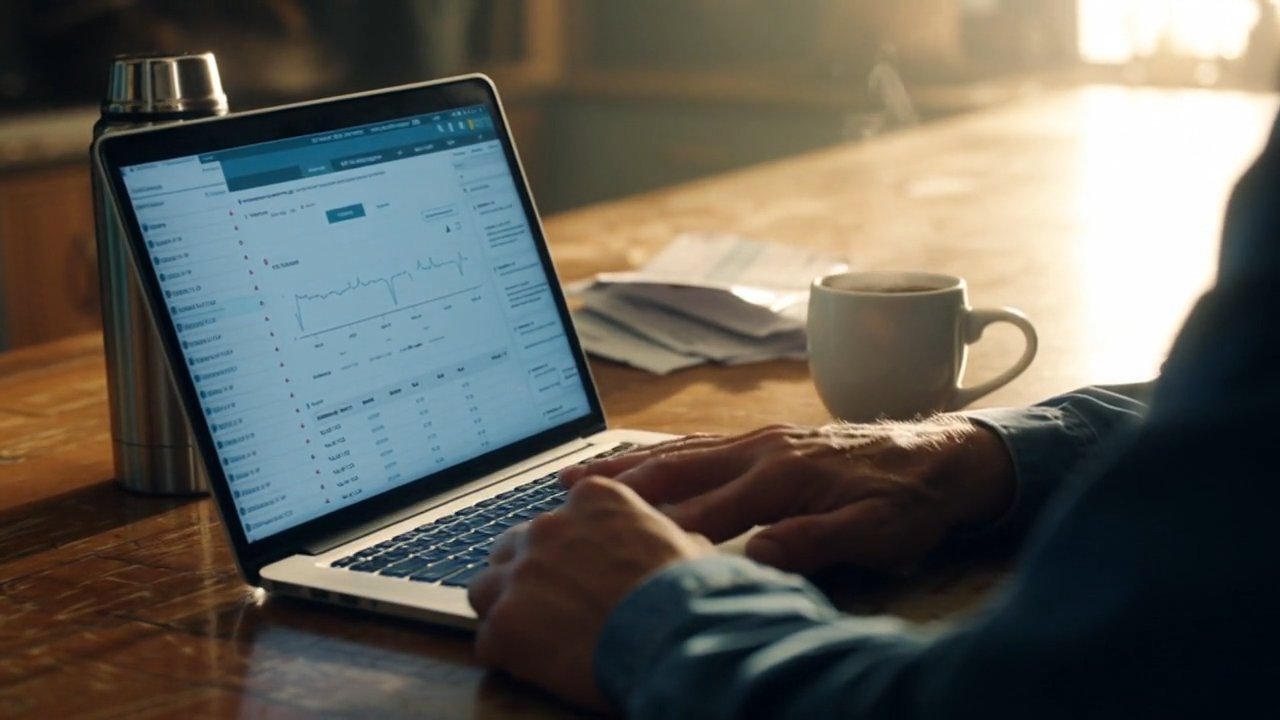
The rest of the economy discovered working from anywhere a few years back, and they haven’t shut up about it since.
Here’s what almost nobody noticed: a small breed of oilmen beat them to it by a decade. And they did it in the industry everyone swears is allergic to change, with real iron, real fluid, and real wells a long way from any office.
They’re called virtual operators. Rigzone once profiled one, and the story is worth retelling.
Enter: John Graham
When Rigzone profiled him, John Graham was a second-generation petroleum engineer with nearly 40 years in the industry. After taking early retirement from Devon, he’d founded Select Exploration Group with his former Devon colleague Paul Baclawski. They bought and operated producing wells.
Here’s what they didn’t have: an office.
When the two struck out on their own, the first fork in the road was money. “We see a lot of our friends go the private equity route to get started,” John said at the time. “If you get backed by a private equity company, they want you to be structured with an office and all the overhead that comes with it.”
According to John, that was bad news.
“We talk to a lot of companies about acquiring some of their existing oil and gas properties that are uneconomic or marginally economic. And with these companies it’s their general administrative expense that’s eating them alive. They have office and staff overhead. What’s more, they’re leasing prime office space, which gets expensive. There’s a lot of oil and gas properties that are profitable if you don’t have that overhead.”
Read that quote again, because it’s the whole thesis. The wells aren’t tired. The overhead is heavy.
So instead of taking the private equity deal, John and Paul partnered with Harbinger Resources, another small petroleum startup that ran the same way. “They’ve got the operations and the financial background; we’ve got the reservoir engineering and geoscience background,” John explained. The Harbinger team worked from their homes too.
“We have no desire to all live in Houston or all live in Oklahoma City and have a conventional company. What we want to do is to acquire and operate producing assets. And we plan to achieve this by working online from different locations.”
And by the time of the profile, that’s exactly what they’d been doing.
The tools of the trade
What used to require a floor of downtown office space now fits on a laptop.
“During the past year, I have probably analyzed two or three acquisition opportunities per month for the group using my petroleum engineering software I have on my laptop,” John told Rigzone. “The information we need is available. It is not always free; there are a lot of state oil and gas boards, corporation commissions that have online well and oil and gas data which can be complemented and augmented by new oil and gas production data services.”
The engineering software that used to live on office machines runs in the cloud now. The state data is online. The meetings happen over video.
That leaves the part that used to chain every operating company to a desk: the daily heartbeat of the field. What did every tank, well, and meter do yesterday? For generations that answer arrived one of two ways. The old way: paper gauge sheets, phone calls, and a clerk retyping numbers into a spreadsheet. Or the upgrade: legacy production software, overpriced and overbuilt, parked on an office laptop where the field data still had to be hauled in and keyed by hand. Two different price tags, same result: somebody sitting at a desk, catching it all.
That layer is now an app on the phone nobody leaves the house without. Not a new device, not a training course: the one already riding in the pumper’s shirt pocket. The pumper gauges the tanks like always, enters the reads where they stand, and the whole picture lands in one place the same day, wherever the operator happens to be sitting. That single change is what turns “working remotely” from a compromise into an advantage.
The part software can’t do
Don’t mistake virtual for hands-off. Relationships still run the patch, and the profile made clear John worked his.
“When we acquired the properties, I spent at least a couple of days with the engineer that works for the company that we acquired the properties from and I quizzed him. Who do you like working with? Who do you not like working with? We prepared a vendor list with contact information that he handed off to me, then I either met or introduced myself to those vendors and picked who I thought could do the job and would be responsive to my needs.”
No algorithm hands you a trustworthy pulling unit crew. You earn that the old way.
The reality of being a virtual operator
Being a virtual operator in this industry is one hundred percent possible. John and Paul weren’t the only ones doing it then, and there are more now. Plenty of small companies run this way, their ranks keep growing, and many of them simply wouldn’t be viable carrying a traditional setup’s overhead. That’s the quiet edge: the properties everyone else calls marginal look different when your G&A is a laptop and a phone plan.
And virtual doesn’t mean you never smell the lease again. At the time of the profile, John was still heading out every four to six weeks, walking the properties and meeting with his pumper.
Most importantly, he’d visit his youngest daughter and her children. They lived conveniently nearby.
Who this is really about
Not everybody wants to run their company from a home office, and nothing says you have to. But every operator, whether you run five wells or five thousand, faces the same fork John described: the overhead you carry is a choice, and the technology stopped requiring it years ago.
The one non-negotiable is the data layer. You can’t run wells from anywhere (or run them lean from an office, for that matter) if yesterday lives on paper in a truck. Same-day field data, entered once by the person standing at the tank, is the foundation the whole model sits on.
That layer is what GreaseBook does. Pumpers enter their reads on their phones, producers see their whole operation the same day, with the pumper’s notes attached. It’s the piece that lets a virtual operator stop choosing between running wells and living where they want, and it does the same job for the operator who keeps the office and just wants yesterday’s field on their phone by morning coffee.
If this sounds like the way you’d rather run things, have a look at GreaseBook and take the quiz while you’re there. Twenty seconds, from anywhere. That’s kind of the point.
An earlier version of this essay was published on Rigzone. Rigzone name and logo are the property of Rigzone.com, Inc.; used here to identify the original place of publication.