Pull up yesterday’s production numbers. Pick any one of them. Now ask it one question:
How do you know?
Not “who wrote it down.” Not “do I trust my guy.” How do you know? What could you point to, if you had to, that proves that number is what the tank actually did?
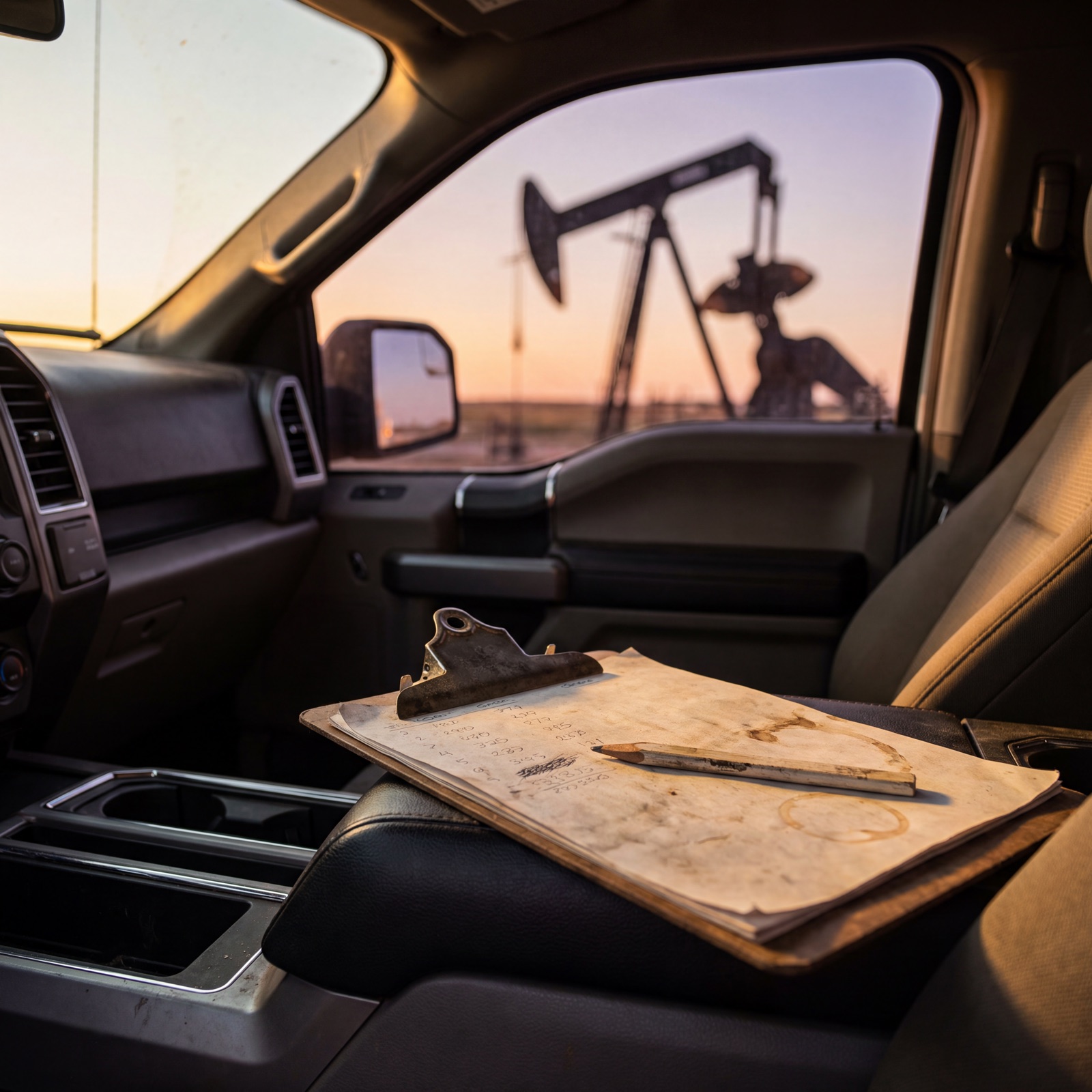
Walk the chain backwards and watch what it’s made of. The number on your desk came out of a spreadsheet. The spreadsheet got it from a clerk. The clerk keyed it off a gauge sheet. The gauge sheet got it from a pencil, in a truck, hours and miles from the tank it describes, written by a man working from a strap table and his own short-term memory. Somewhere back down that chain, fluid actually sat at some level in some tank. Everything since has been testimony.
Every link in that chain is trust. Not one link can prove itself. And here’s the sentence I want you to sit with, because it’s the whole essay: nobody’s lying to you, and nobody can prove they’re not.
This is not about your pumper
Let me be clear about what I’m not saying, because the patch has heard the ugly version of this pitch before.
I’m not saying your pumper’s crooked. After fifteen years around this industry and ten thousand pumpers, I’ll tell you the good ones outnumber the bad ones so badly it isn’t worth discussing. Yes, pencil-whipping exists (numbers written from the truck instead of the tank; every operator over forty has a story). Yes, somewhere right now a vac truck is hauling a load nobody’s ever going to reconcile. Real, and rare.
The everyday problem is quieter and bigger: an honest man producing unverifiable numbers, because the medium he’s been handed can’t hold proof. Paper doesn’t know what time it was written or where. A spreadsheet cell doesn’t remember what it said before somebody overwrote it; the correction and the corruption look identical. And the legacy production systems the industry sold as the fix just moved the testimony indoors: the data still gets keyed at a desk, from paper, from memory, hours or days after the fact. Secondhand testimony with a license fee.
The medium can’t carry evidence. So the whole operation runs on character references instead.
The audit test
Here’s what makes this strange when you step back from it.
You wouldn’t pay an invoice without a signature. You keep receipts on a $40 parts run. Come audit season, every dollar in the company can produce a paper trail, because dollars are serious and everybody knows it.
Then you turn to the numbers that actually run the company, the daily production data that decides workovers, allocations, which leases get attention, what you report to the state and to partners, and none of it could survive the scrutiny you’d apply to a lunch receipt. No timestamp. No location. No history. No way to distinguish the read taken carefully at 6:40 a.m. from the one reconstructed at a kitchen table twelve hours later.
Nobody built it this way on purpose. Paper was the only medium the field had for a hundred years, and the spreadsheet was just paper’s word, retyped. Both were the best word available at the time. That excuse expired, though. The tools to sign a field number now ride in every pumper’s shirt pocket.
The anatomy of a number you can trust
What separates a verifiable number from testimony? Four things, and they’re all boring.
Where it was entered. A read that goes in while the man is standing at the tank is a different class of evidence from one reconstructed later somewhere else, say, a kitchen table, fifty wells after the fact.
When. A timestamp, applied by the system and not the pencil, ends every argument about whether the morning read was a morning read.
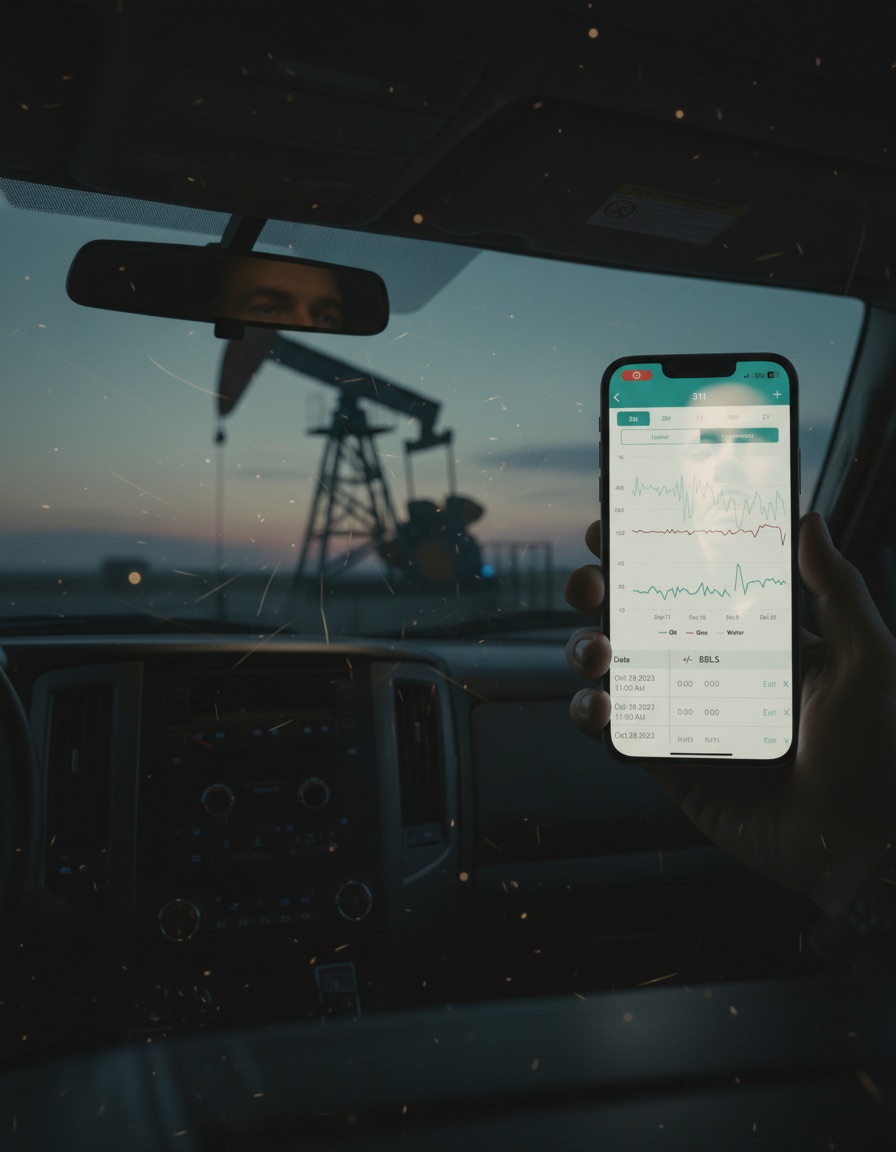
Against what. The app on the pumper’s phone quality-controls every entry as it’s made, checking it against that well’s own history before it ever leaves the lease. If a number doesn’t fit the well, the app flags it right there, while the man can still look at the gauge again. Most pumpers never even notice this is happening; it just feels like typing a number in. The nine-thousand-barrel typo dies at the wellhead instead of in your allocations. Paper accepts anything you write on it. The app checks your work.
And with what attached. The pumper’s note, and a photo of the run ticket itself, riding with the number forever. Not a transcription of the ticket. The ticket.
A number with a time, a place, a history, and its paperwork attached isn’t testimony anymore. It’s evidence. And once every read on every lease arrives that way, something shifts in the whole operation. It isn’t even about arguments; most of the time it’s just a pumper second-guessing himself. Did I gauge that tank before the load or after? Was that well doing this last month too? Questions he used to carry around all day, or shrug off, he now settles in ten seconds, standing right there, from the record. What did that well do the week before the workover? When did the water cut actually start climbing? Nobody has to litigate memory anymore. On any question, at any level of the company, you just read the record.
The man with the most to gain
Here’s the twist most operators don’t see coming: the person verification serves best is the pumper.
An honest hand’s work, on paper, is invisible. His careful reads look exactly like the other guy’s careless ones; when a number gets questioned, all he has to stand on is his word. Give him a system that stamps his reads with time and place and history, and his diligence becomes provable for the first time in his career. He can pull up his own months of clean entries at the well, settle a question in ten seconds, and get back to work. The good ones don’t fear the signed number. They’ve been waiting for it.
That’s the system GreaseBook is. The industry’s simplest production app: pumpers enter reads on their phones at the well, every entry checked against history the moment it’s made, notes and ticket photos attached, the whole operation on your screen the same day. It’s been signing field numbers for 15 years, for 600+ producing companies and 10,000+ pumpers, across 220 million barrels. Pumper learning curve is about 8 minutes, setup is turnkey, and it’s all backed by a 200% money-back guarantee, which is only possible because the rollouts almost never fail.
Your wells already tell the truth. The question is whether the paperwork between you and them can carry it.
If that question sticks with you, take a look at GreaseBook and take the quiz while you’re there. About twenty seconds. And unlike a gauge sheet, it can prove when you took it.