Every failed software rollout in this industry has the same autopsy.
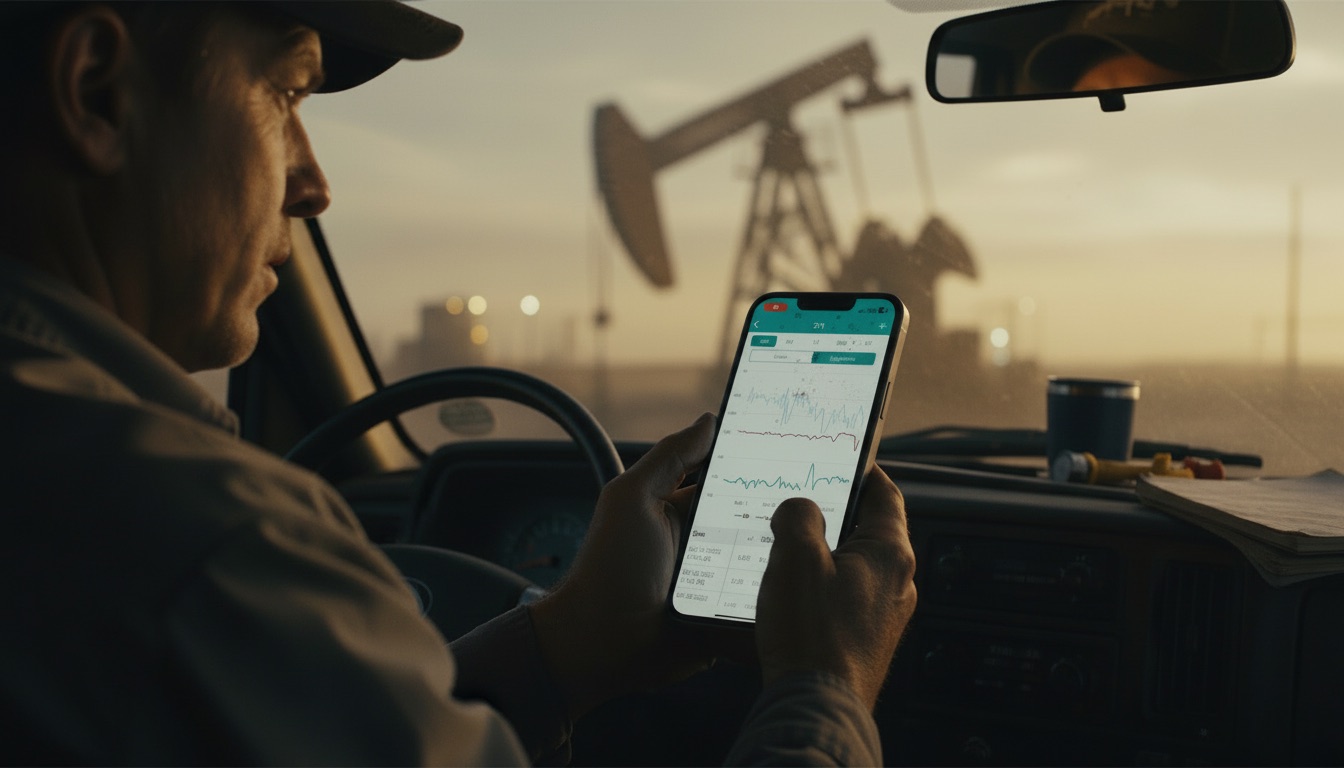
It doesn’t die in the conference room where it was bought. It dies at 5:40 on a winter morning, in a truck, when a pumper decides it’s more work than the paper it replaced.
You’ve seen the graves. The license that keeps renewing for a system one clerk uses under protest. The pumper portal with three logins since spring. The “digital transformation” that lasted exactly two hitches. Ask how any of them died and you’ll hear the same story: the office loved it. The field never got on board.
The demo that lies to you
Every software demo in this industry is performed under laboratory conditions. The vendor’s best rep, office wifi, a big clean screen, and an audience of people who will never enter a gauge reading in their lives.
There’s one question that kills the demo, and almost nobody asks it:
Will my pumper actually use this at 5:40 in the morning, in January, with gloves on and no bars of signal?
The vendor is praying you don’t ask. Because for most systems ever sold to this industry, the honest answer is no.
Respect the notebook
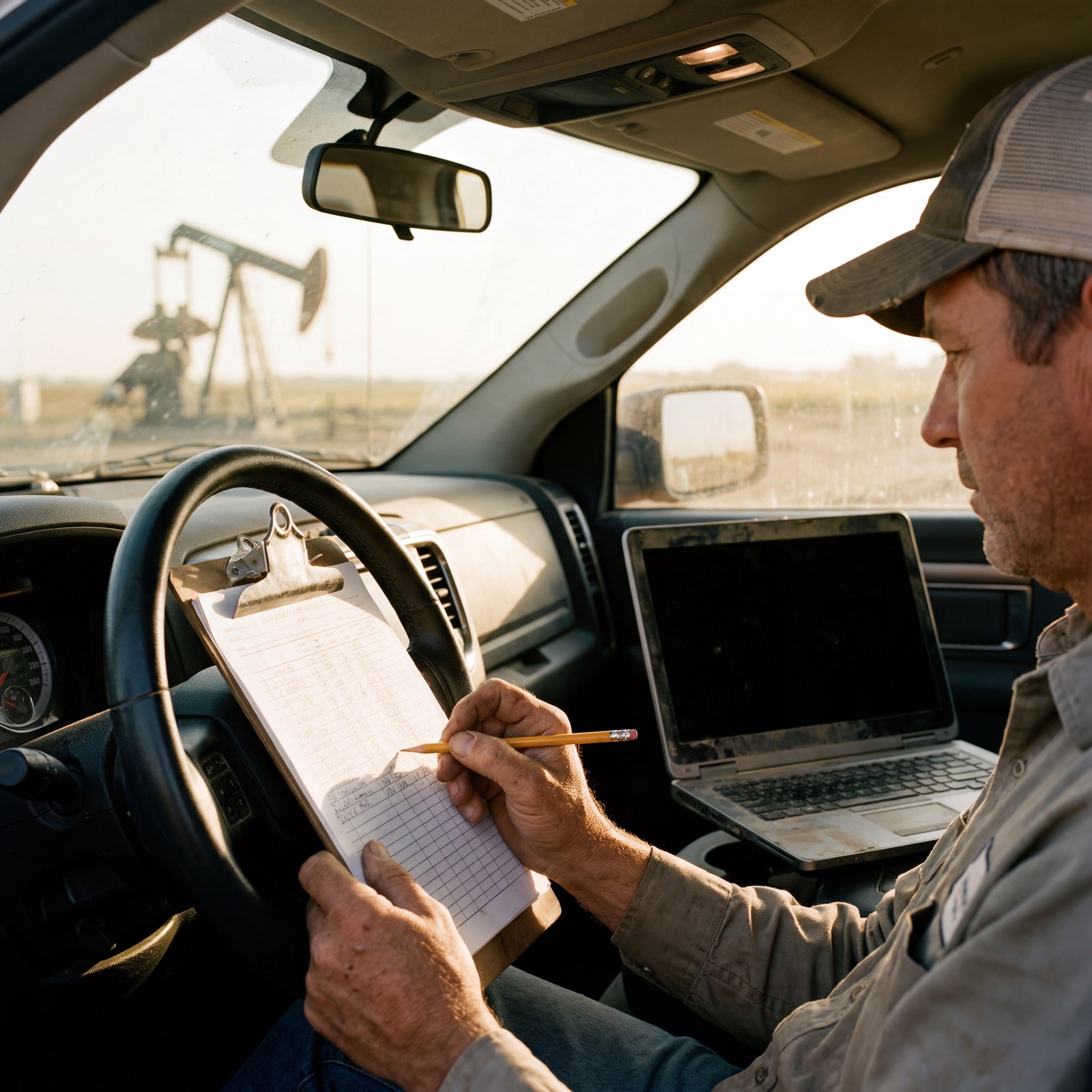
To understand why, you have to respect the thing all this software keeps losing to: a three-dollar Big Chief paper notepad.
The notebook has a perfect adoption record. It boots instantly. It works at ten below. It never asks for a password, never loses a sync, never needs an update at the worst possible time. Drop it in the mud, wipe it on your jeans, keep writing.

The notebook’s failure isn’t in the truck. It’s everywhere after the truck. The numbers live in forty different shirt pockets. The office retypes them into a spreadsheet, which means you’re paying twice for the same data: once to write it down and once to key it in. Nothing ties together. By the time yesterday becomes a report, it’s two weeks old, and you can’t hold anyone accountable to a number nobody can find.
Paper wins the truck and loses the company.
The spreadsheet that feels like software
Plenty of operators looked at the paper problem and made the obvious move: Excel. It’s free. It’s digital. Numbers in a grid on a computer feel like modernization: organized, centralized, backed up. Software, more or less.
It’s a mirage. Look at how the numbers actually get into that spreadsheet. The pumper still writes his reads in the Big Chief or texts them in at lunch, and somebody in the office still keys them in by hand. Excel didn’t kill the double entry. It moved the second shift indoors and called it progress.
And the grid brings failure modes paper never had. Nobody can say which file is the truth: this month’s gauges live in “FINAL_v3(2).xlsx” in one inbox and last month’s in another, and every route has its own format. A bad sort scrambles rows without a sound. One fat-fingered cell poisons a month of trends. And there’s no validation at the source: Excel will accept a tank level of nine thousand feet as happily as nine.
Which brings us to the price tag, because “free” is the biggest lie in the whole arrangement. Excel doesn’t cost nothing. It just never sends an invoice. You pay in a clerk’s hours, keying the same numbers twice. You pay in the downtime that hid for two weeks inside a stale file. You pay in run tickets that won’t reconcile, and in the well that slipped while the truth sat in somebody’s inbox. Everything that falls through those cracks is the subscription fee. It’s the most expensive free software in the oil patch.
So the data is still late, still secondhand, and now it argues with itself. Excel is paper with a power cord.
The expensive way to keep using paper
So operators went shopping for real software. And the legacy production systems made the opposite trade: they won the office and died in the truck.
Contracts with hefty setup fees. Days of training for a man who never asked for it. And nearly all of it built for a laptop, which means the field data gets keyed in at a kitchen table at night, from memory, or from paper scribbles that rode home in a shirt pocket.
Look at that workflow honestly. The numbers still start on paper. All you’ve bought is a second data-entry shift and a contract on top of the process you were trying to kill.
One option is cheap and slow. The other is expensive and slow.
Your sharpest pumper is right
Here’s the part nobody wants to hear: when your best hand shrugs off the new system, he isn’t being a dinosaur. He’s doing his job.
His job is production. Keep the wells pumping, catch the compressor before it dies, get the route run. Every minute a system costs him is a minute taken off a well. Whether you meant to hire one or not, he is the toughest software QA department in the world. If a tool doesn’t earn its keep in his truck, it doesn’t deserve to exist.
The lesson isn’t “find more patient pumpers.” The lesson is: stop buying software for the people who watch the demo, and start buying it for the man who has to use it with gloves on.
A simple system your whole field actually uses beats a “better” system half of them ignore, and it isn’t close. Data with holes in it can’t reconcile a run ticket, can’t trend a well, can’t prove downtime. Sixty percent capture isn’t sixty percent of the truth. It’s a guess wearing numbers.
What pumper-proof looks like
The bar is brutal and simple: beat the notebook on the notebook’s own terms.
It has to live on the phone already riding in his shirt pocket. No new device, no laptop, no training course.
It has to work offline, where there’s no signal, and sync itself when the truck crests a hill. No excuses in either direction.
Entering a gauge has to be as fast as sending a text. Faster, ideally, than writing it down.
It has to check the numbers at the door. Remember the spreadsheet that swallows a nine-thousand-foot tank level without blinking? The phone can do what the grid never could: sanity-check every entry against that well’s own history, on the spot, and ask the pumper about anything that looks off while he’s still standing at the tank. Quality control at the source, not an autopsy at month-end.
And it has to give something back. Standing at the well, he should be able to pull up that well’s history and his own comments from last month, which turns your sharpest pumper from a note-taker into a diagnostician. The field gets smarter, not just supervised.
Clear that bar, and the war between the office and the truck just ends. The office gets its centralized, same-day numbers. The pumper gets off his route faster than he did with paper. Nobody has to be forced to use the thing that saves them time.
Built for the truck first
That bar is GreaseBook’s entire design brief, and it has been for 15 years.
The learning curve is about 8 minutes: if a pumper can text, he can use it. It rides in the field with 10,000+ pumpers across 600+ producing companies. Rollouts stick about 98% of the time, for the unglamorous reason this whole essay has been about: it was built for the truck first, and the office inherits the win. Setup is turnkey; a petroleum engineer builds your company out for you, and most operations are rolled out in less than a week. Plenty in less than an afternoon.
You can keep buying software for the conference room and burying it in the field. Or you can buy for the truck first and let the office win by default.
If this sounds interesting to you, take a look at GreaseBook and take the quiz while you’re there. It runs about twenty seconds. And if you’re wondering about your crustiest hand: the 85-year-old pumper who refuses to retire and keeps a forty-year well-history file in his head picked the whole app up in under eight minutes. So have ten thousand others. Yours will be no different.